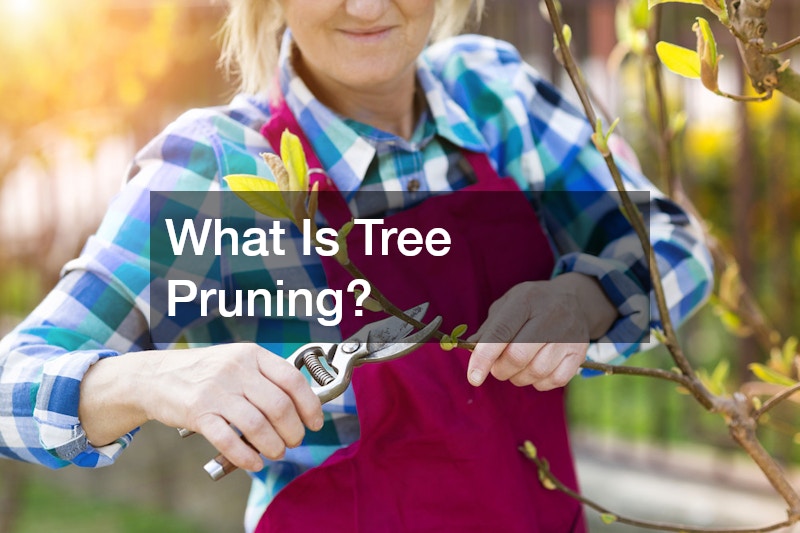
Trees are an important part of any landscape. They provide shade, improve curb appeal, support wildlife, and can even help protect homes from harsh weather. However, trees do not always grow in a way that is healthy or safe. Dead branches, weak limbs, and overgrown growth can create problems if they are left unattended. This is where tree pruning becomes an important part of landscape maintenance. Tree pruning is the process of selectively removing branches, limbs, or other parts of a tree to improve its health, appearance, structure, or safety.
Unlike simply cutting branches at random, proper pruning requires an understanding of how trees grow and respond to cuts. When performed correctly, pruning can help a tree develop a stronger structure and remain healthy for many years.
Why Is Pruning Important?
One of the main reasons to prune a tree is to remove dead, damaged, or diseased branches. These branches can become entry points for insects and diseases, while damaged limbs may break unexpectedly during strong winds or storms. Removing them can reduce potential hazards and allow the tree to direct its resources toward healthy growth. Pruning can also improve the structure of a tree. Young trees sometimes develop multiple competing leaders, branches with weak attachment points, or growth that is unevenly distributed. Addressing these issues early can encourage stronger branch development and reduce structural problems as the tree matures. Another benefit is improved air circulation and sunlight penetration. Dense canopies can prevent sunlight and air from reaching interior branches and surrounding plants. Carefully removing selected branches can open the canopy without unnecessarily reducing the tree’s foliage.
When Should Trees Be Pruned?
The ideal pruning schedule depends on the type of tree, its condition, and the reason for pruning. In many cases, late winter or early spring is a suitable period because trees are dormant and their structure is easier to see. However, dead or hazardous branches can often be removed whenever necessary. Certain trees and plants have different seasonal needs, so there is no universal pruning schedule. Flowering trees, for example, may need to be pruned at a specific time to avoid removing buds that would produce flowers. Local climate and weather conditions can also influence the best timing. Regular inspections are useful even when immediate pruning is not required. Looking for dead branches, cracks, weak connections, or unusual growth can help property owners identify potential problems before they become serious.
Common Types of Pruning
Different pruning techniques serve different purposes. Crown cleaning involves removing dead, diseased, broken, or poorly attached branches. This is one of the most common forms of maintenance and focuses primarily on improving tree health and safety. Crown thinning involves selectively removing branches throughout the canopy to improve light and air movement. It should be done carefully because removing too much foliage can stress a tree and encourage unwanted growth. Crown raising involves removing lower branches to provide clearance for pedestrians, vehicles, buildings, or other structures. This technique is often used when trees grow close to sidewalks, driveways, roads, or homes. Crown reduction is used to decrease the overall size or spread of a tree. Because removing large amounts of live growth can weaken a tree, reduction should be performed carefully and only when appropriate. Topping, which involves cutting major branches back to stubs, is generally considered an improper practice because it can cause weak regrowth and long-term structural problems.
Should You Prune a Tree Yourself?
Small branches on young or manageable trees may sometimes be handled by a knowledgeable property owner. However, larger trees can present serious safety risks. Working near power lines, using ladders, or cutting large limbs can result in severe injuries or property damage. Professional arborists have specialized equipment and training for assessing tree structure and performing difficult cuts safely. They can also recognize signs of decay, disease, pest activity, or structural weakness that may not be obvious to an inexperienced observer. Homeowners should be especially cautious when a tree has large dead branches, significant cracks, storm damage, or limbs growing near utility lines. In these situations, professional assistance is often the safest choice.
The Long-Term Benefits
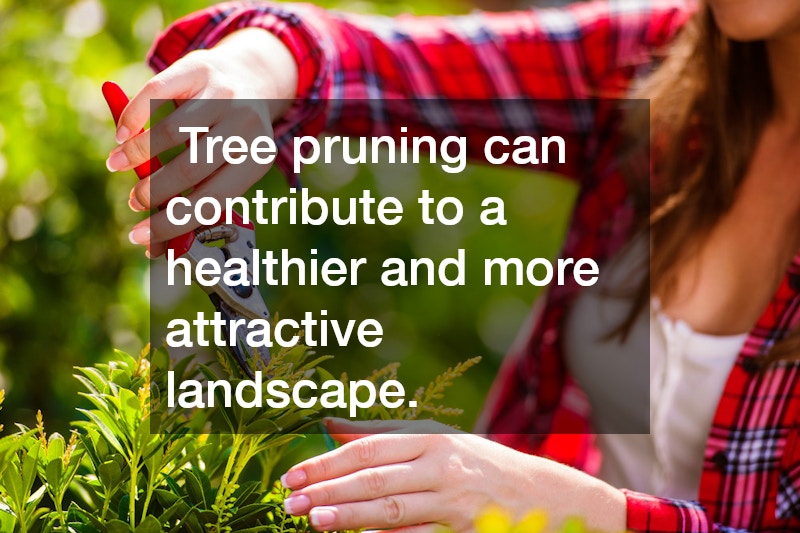
When performed appropriately, tree pruning can contribute to a healthier and more attractive landscape. Removing problematic growth can reduce hazards, improve the tree’s structure, and help maintain adequate clearance around buildings and walkways. Proper maintenance may also help young trees develop strong forms that require less corrective work as they age. However, pruning is not simply about making a tree look smaller or more orderly. Every cut affects the tree’s future growth. Understanding the tree’s species, age, health, and growing environment is essential for making good decisions.
Ultimately, tree pruning is a valuable component of responsible tree care. Whether the goal is to remove hazardous branches, improve structure, encourage healthy growth, or maintain clearance, thoughtful pruning can help trees remain strong and functional. By avoiding excessive cutting and seeking professional help for complex or dangerous situations, property owners can protect both their trees and the people and structures around them.