
Maintaining a home in top condition is an ongoing responsibility that requires balancing routine repairs, functional upgrades, and strategic structural improvements. Over time, natural wear and tear, changing family needs, and evolving architectural trends make property updates essential. Addressing minor issues before they become major structural threats preserves the core value of your real estate while creating a comfortable, modern living environment. Taking a proactive, comprehensive approach to property management ensures that every square foot of your residence remains safe, visually appealing, and highly efficient.

Maintaining Drainage and Exterior Integrity
Over time, seasonal downpours, severe storms, and debris accumulation can cause significant strain on your home’s water management systems. When channels become clogged or damaged, water can overflow and pool near the foundation, causing structural weakness, soil erosion, and basement moisture problems. Scheduling routine gutter repairs ensures that rainwater is channeled safely away from your home’s perimeter, protecting your siding, foundation, and landscape from long-term water damage and keeping your property fully shielded against seasonal storms.
Beyond simply handling immediate overflows, properly operating gutter channels act as the primary defense system for your entire exterior envelope. When water backs up due to bent aluminum, sagging brackets, or accumulated foliage, it seeps under fascia boards and soffits, quietly rotting structural wood behind your walls. Over several seasons, this unseen moisture intrusion can destroy insulation values, create ideal conditions for harmful toxic mold colonies, and cause expensive drywall damage inside upper-story ceilings. Furthermore, unmanaged runoff cascading directly from roof edges strips away soil around perimeter foundations, leading to hydrostatic pressure build-up and foundation cracking. Investing in regular maintenance, pitch adjustments, and protective leaf guards ensures that storm runoff flows continuously through downspouts and safely discharges far away from your home’s critical footings.
Overhead Weather Resistance and Protection
The overhead coverage of your home bears the brunt of harsh weather conditions, including UV rays, heavy snow, and high winds. Loose shingles, cracked sealant, or aging material can create subtle entry points for moisture, leading to ceiling stains, compromised insulation, and internal timber rot. Working with experienced local roofers allows you to catch minor structural flaws early, repair flashing, and ensure that your entire roofing assembly remains watertight, energy-efficient, and structurally sound through every season.
A roof system is far more than just surface shingles; it is a complex assembly of underlayments, ice dams, ridge vents, and protective flashing around chimneys and vent pipes. When high winds uplift shingles or hail punctures outer protective granules, the underlying decking becomes vulnerable to rapid decay. Professional inspections catch compromised seals around skylights and roof valleys long before water begins leaking onto top-floor ceilings. In addition to preventing catastrophic leaks, maintaining proper attic ventilation alongside sound roofing materials prevents heat buildup during summer and ice dam formation during severe winter freezes. By keeping every component of your overhead structure in prime condition, you extend the operational lifespan of the roof, maintain proper indoor thermal regulation, and protect your family from costly internal water restoration projects.
Ground Drainage and Foundation Preservation
While overhead protection keeps rain off your home, proper ground drainage ensures that ground water does not compromise surrounding structures or outdoor living zones. Poorly graded soil, compacted yards, or unmanaged tree roots can lead to standing water, which damages hardscaping, concrete footings, and retaining walls. Implementing comprehensive land grading, underground drainage pipes, and permeable ground covers protects exterior foundations, keeps crawlspaces dry, and maintains structural stability across your entire lot.
When groundwater accumulates near foundation walls without a clear exit path, extreme hydrostatic pressure exerts immense force against concrete blocks and poured foundations. Over time, this pressure causes basement walls to bow inward, develop structural horizontal cracks, and leak persistent groundwater into lower living areas. Soil surrounding the house must slope away at a steep enough angle to naturally direct surface water into catch basins, French drains, or swales. Integrating subsurface drainage solutions, such as perforated pipe networks surrounded by gravel, collects subsurface moisture and redirects it safely toward discharge zones. By actively controlling ground saturation around your perimeter, you preserve structural integrity, prevent basement flooding, avoid expensive wall bracing, and eliminate damp conditions that attract invasive pests to your lower levels.
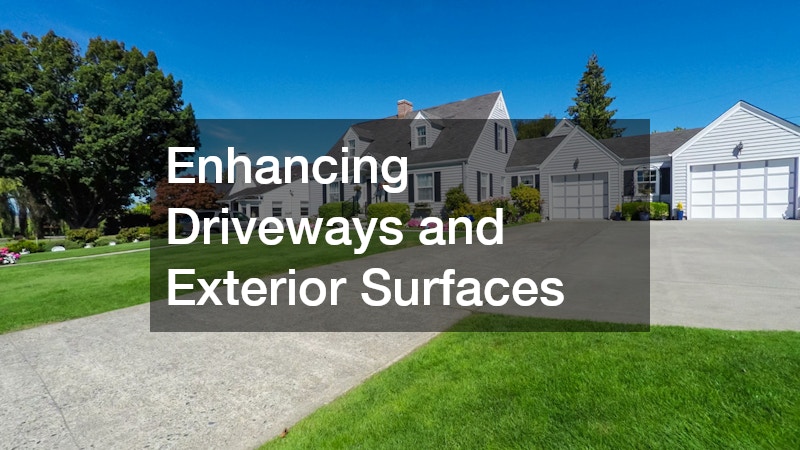
Enhancing Driveways and Exterior Surfaces
Driveways and exterior walkways are high-traffic zones that significantly influence the overall first impression of your property. Weather cycles, vehicle weight, and ground shifts can cause cracked asphalt or unlevel concrete, creating safety hazards and unappealing visual flaws. Professional paving services provide asphalt resurfacing, concrete sealcoating, and structural repair to restore smooth, durable driveways that withstand heavy daily usage while dramatically improving your home’s exterior aesthetic.
Asphalt and concrete surfaces are continuously exposed to harsh environmental stresses, ranging from UV radiation and automotive fluid leaks to freeze-thaw cycles that expand small surface fissures into wide potholes. When water penetrates untreated cracks in paved surfaces, winter freezing causes subgrade soil movement, breaking apart base layers and creating dangerous tripping hazards. Applying high-grade sealants seals porous aggregates, repels chemical spills, and shields bitumen binders from sun-induced oxidation and fading. For severely degraded driveways, full-depth asphalt paving or concrete slab leveling restores proper pitch and load-bearing strength. Upgrading entrance paths, aprons, and walkways with clean, durable paving not only enhances safety for visitors and vehicles but also adds substantial architectural polish and immediate market value to your overall property.
Managing Surrounding Landscape Hazards
Large, aging, or overgrown trees located near your house present serious risks during heavy windstorms or severe weather events. Heavy branches can damage rooflines, foul gutter systems, or entangle power lines, while invasive root networks can crack driveway pavement and destabilize underground plumbing. Partnering with a reliable local tree service ensures that dead or hazardous limbs are safely trimmed, declining trees are removed, and the overall health of your property’s canopy is maintained without risking damage to nearby structures.
While mature trees provide valuable summer shade and natural beauty, neglected canopies near building structures pose significant financial and safety liabilities. Large dying limbs hanging over rooflines can snap under the weight of ice or sudden wind gusts, causing catastrophic roof collapse, crushed framing, and severe indoor damage. Furthermore, dense branches contacting exterior siding rub away paint coatings, trap moisture against wood structures, and create easy access bridges for squirrels, raccoons, and insects attempting to enter attic spaces. Strategic pruning thins out dense canopies to reduce wind resistance, improves sunlight exposure for surrounding lawn areas, and eliminates deadwood. Professional tree care specialists assess root health, diagnose fungal diseases early, and utilize controlled rigging techniques to remove hazardous timber safely without damaging surrounding hardscaping or utility infrastructure.
Creating Comfortable Outdoor Shade Zones
Extending functional living space beyond interior walls allows property owners to enjoy outdoor areas comfortably regardless of intense sun or light rainfall. Installing customized shading structures over patios, decks, or outdoor seating areas provides immediate protection from UV rays and helps regulate exterior temperatures. Consulting reputable canopy companies enables you to design durable, weather-resistant shade solutions that enhance outdoor entertaining space, protect patio furniture from sun damage, and create an inviting transition between indoors and outdoors.
Direct sunlight can rapidly heat outdoor stone patios and composite decks, making them uncomfortably hot to walk on and limiting their practical usability during peak summer afternoons. Installing customized architectural shade solutions—such as retractable awnings, shade sails, or permanent pergolas—dramatically lowers ambient temperatures in covered zones, creating cool outdoor living rooms for relaxation and family gatherings. Beyond personal thermal comfort, high-quality exterior shade fabrics block harmful ultraviolet rays that fade outdoor cushion fabrics, degrade wicker furniture, and heat up interior rooms adjacent to large patio windows. By integrating custom shade structures that complement your home’s architectural design, you effectively expand your usable floor area, lower cooling demands on adjacent interior spaces, and transform simple backyards into luxurious, year-round entertainment hubs.

Upgrading Interior Plumbing and Water Systems
Interior modernizations often begin in key utility areas where functional upgrades yield immediate benefits in daily comfort and water efficiency. Outdated piping, low-pressure fixtures, or subtle hidden leaks can quietly inflate monthly utility bills and cause hidden structural damage inside walls. Engaging a skilled plumber allows you to update old pipe networks, replace inefficient fixtures with high-performance modern alternatives, and ensure reliable water pressure and drainage throughout your entire household.
Aging indoor plumbing systems, especially galvanized iron or old copper lines, suffer from internal corrosion and mineral scale accumulation over decades of daily service. This degradation restricts water volume, causes frustrating pressure fluctuations, and leads to pinhole leaks hidden inside wall cavities and subfloors. Left undetected, minor plumbing leaks cause extensive subfloor rot, ruin cabinetry, and foster hidden mold growth. Modernizing your interior plumbing with the help of a plumber using durable PEX or copper piping restores clean, consistent water flow to kitchens and bathrooms while eliminating hidden leak vulnerabilities. Upgrading to low-flow toilets, smart pressure-balancing shower valves, and modern touchless faucets significantly reduces daily water usage, lowers monthly municipal utility bills, and provides modern convenience throughout every fixture in your home.
Ensuring Clean Water Distribution and Supply
A reliable clean water supply is fundamental to every household’s health and daily routine. Aging main supply lines, mineral buildup, or failing shut-off valves can compromise water quality and cause sudden plumbing emergencies. Booking a qualified plumber for regular system inspections, main line flushes, or water filtration installations protects your family’s health, prevents unexpected pipe bursts, and extends the operational lifespan of major appliances like water heaters and dishwashers.
The quality of water flowing into your home directly impacts both your family’s physical well-being and the longevity of your interior appliances. Municipal water supplies and private wells often carry dissolved minerals, chlorine, heavy metals, or sediment that cause scaling inside tankless water heaters, destroy dishwasher heating elements, and impart unpleasant tastes and odors. Installing whole-house water filtration systems and water softeners strips out harsh contaminants, protecting delicate appliance components and ensuring crystal-clear drinking water from every tap. Furthermore, routine inspections of main shut-off valves and pressure-reducing valves prevent catastrophic indoor flooding caused by sudden municipal pressure spikes or failing supply lines, giving you complete control over your home’s water safety and distribution system.
Protecting Interiors from Environmental Pests
A modern, comfortable home environment requires complete protection against unwanted pests that threaten both structural materials and indoor hygiene. Termites, rodents, and moisture-loving insects can burrow into framing timbers, chew through electrical wiring, and introduce allergens into interior air spaces. Utilizing professional pest control services establishes effective barrier treatments, eradicates active infestations, and implements long-term prevention strategies, ensuring that your home remains clean, healthy, and structurally secure.
Unchecked pest activity inside a house causes severe hidden structural damage and poses genuine health hazards to household occupants. Subterranean termites and carpenter ants quietly hollow out wooden support studs, floor joists, and roof rafters, compromising structural stability long before visible signs appear on surface walls. Routine inspection cycles ensure early detection of seasonal pests, safeguarding your home’s framing materials, protecting indoor air quality, and preserving a hygienic, worry-free living environment.

Enhancing Interior Lighting and Electrical Networks
Modern living relies heavily on robust electrical infrastructure to power smart appliances, home office setups, and contemporary lighting fixtures. Outdated wiring or insufficient panel capacity can cause frequent breaker trips, flickering lights, and potential safety hazards. Updating your home’s electrical panel, adding dedicated outlets, and installing energy-efficient LED lighting improves energy efficiency, supports high-demand devices, and elevates the overall interior ambiance of your living space.
Older electrical systems were never engineered to support the heavy power demands of modern households filled with high-wattage kitchen appliances, electric vehicle chargers, HVAC equipment, and extensive home entertainment networks. Outdated breaker boxes and ungrounded knob-and-tube or aluminum wiring pose severe overheating and electrical fire risks. Upgrading your service panel to 200 amps or higher provides safe, consistent power distribution throughout all circuits. Incorporating smart dimmers, recessed architectural LED lighting, and USB-integrated wall outlets enhances daily convenience and allows you to customize room lighting for work, relaxation, or entertaining while drastically cutting electrical energy consumption.
Transforming Garage and Utility Floors
Garages, basements, and utility rooms are frequently subjected to heavy foot traffic, chemical spills, and moisture exposure, leading to cracked, dusty concrete surfaces. Applying high-performance epoxy floor coatings creates a seamless, durable, and chemical-resistant barrier over plain concrete. This smooth finish not only prevents staining and dust accumulation but also turns ordinary utility rooms into clean, bright, and easily washable spaces suitable for workshops, storage, or expanded living areas.
Unfinished concrete floors are inherently porous, absorbing oil drips, road salt, automotive fluids, and moisture that cause surface spalling and persistent concrete dust across lower living areas. High-solids polyaspartic or epoxy floor systems bond directly with the underlying concrete, creating a non-porous, highly resilient shield that repels hot-tire pickup, heavy tool impacts, and harsh chemical cleansers. The high-gloss finish reflects ambient overhead light, instantly turning dark, dingy garages and storage basements into brightly illuminated, functional workspaces. Easily cleaned with a simple mop or squeegee, coated floors stop concrete dusting, improve indoor air quality in adjoining rooms, and elevate utilitarian storage areas into polished extensions of your interior home decor.
Seamless Transitions with Glass Entryways
Modern interior and patio design emphasizes open, light-filled layouts that connect indoor living areas with outdoor views. Aging or sticky sliding doors with worn tracks can draft cold air, hinder natural light, and compromise energy efficiency. Arranging a professional sliding door installation replaces outdated glass doors with energy-efficient, smooth-gliding glass units that enhance thermal insulation, improve natural lighting, and create an elegant, effortless flow between your interior living room and outdoor patio space.
Old glass patio doors are often major sources of interior energy loss, utilizing single-pane glass and worn weatherstripping that allow winter drafts and summer heat to penetrate your primary living spaces easily. Replacing worn patio doors floods your home with natural daylight, lowers monthly heating and cooling expenses, improves indoor security, and creates a beautiful, frictionless transition to your outdoor deck or garden retreat.
Proactively upgrading and maintaining your property is the most effective way to preserve its value, ensure safety, and improve daily quality of life. Investing in quality materials and professional craftsmanship guarantees that your property remains a safe, energy-efficient, and modern sanctuary tailored to meet your evolving needs for years to come.