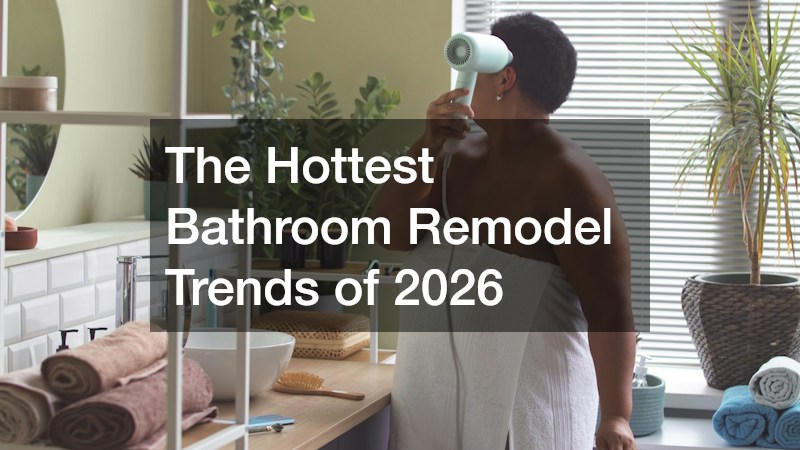
bathroom-tile-installation’>Bathroom design in 2026 has shifted decisively away from sterile, showroom-white aesthetics toward restorative, highly personalized spaces. Homeowners are treating the modern bathroom less like a utilitarian checkpoint and more like an intentional home spa.
By pairing organic textures and tactile finishes with intelligent, concealed technology, this year’s top remodel movements focus on longevity, calm, and sensory indulgence.
Whether updating a primary suite or revamping a compact powder room, here are the dominant design and architectural trends shaping bathroom renovations in 2026.
The Rise of the Integrated Wet Room
The enclosed, cavernous shower stall is rapidly giving way to open-concept wet rooms. In 2026, combining the shower and a freestanding soaking tub behind a single glass barrier—or leaving the space curbless and completely open—has become the premier architectural choice.
Curbless entries eliminate visual disruption, expand perceived floor space, and seamlessly incorporate universal accessibility principles without sacrificing luxury. These configurations feature zero-threshold drainage channels set flush against slab porcelain or large-format natural stone floors. Placing an ergonomic composite or Japanese hinoki-wood soaking tub directly inside the shower zone allows for uninterrupted water flow, simplified maintenance, and a cohesive, expansive look that elevates even modest footprints.
Earthy Warmth and Tactile Surfaces
Cool gray tones and cold subway tiles have officially taken a back seat. Homeowners are leaning heavily into tactile, earthy palettes that bring the outdoors in. Terracotta, honed travertine, fluted wood vanities, and hand-molded zellige tiles define current walls and millwork.
Microcement and lime-plaster wall applications have also surged in popularity, offering seamless, water-resistant surfaces devoid of distracting grout lines. When combined with rich, quartersawn walnut or white oak cabinetry, these natural textures soften acoustic reverberation and create an enveloping warmth. When planning a remodel for a historic colonial or suburban split-level bathroom in Cinnaminson, NJ, introducing natural wood cabinetry and warm sand tones provides a grounding contrast that bridges traditional architecture with contemporary relaxation.
Discreet, Wellness-Focused Smart Technology
Technology in the 2026 bathroom is ubiquitous yet invisible. The focus has moved away from flashy digital touchscreens toward intuitive, behind-the-scenes wellness fixtures designed to streamline daily rituals.
Smart toilets and integrated bidet seats have become standard expectations rather than novelties, boasting self-cleaning UV wands, motion-activated lid controls, heated seating, and personalized user profiles. In the shower, digital thermostatic valves allow homeowners to preset their ideal water temperature, flow rate, and spray patterns via voice commands or subtle presets. Meanwhile, heated floor systems with smart scheduling and anti-fog mirror demisters operating on ambient humidity sensors make high-performance living effortless.
Sculptural Sinks and Statement Stone Slabs
Individual accent tiles are being replaced by continuous, dramatic stone installations. Full-height slab backsplashes behind the vanity create striking focal points while eliminating grimy grout lines. Designers are favoring stones with bold, dynamic veining, such as Calacatta Viola, Forest Green marble, and deeply figured quartzite.
Vessel and pedestal sinks are also undergoing a sculptural renaissance. Rather than standard ceramic drop-in basins, 2026 favors integrated trough sinks fabricated directly from the countertop slab or monolithic vessel sinks chiseled from solid blocks of river stone or soapstone. Paired with wall-mounted faucets in living finishes like unlacquered brass, oil-rubbed bronze, or brushed gunmetal, the vanity area transforms into a curated gallery piece.
Circadian Lighting and Layered Illumination
Harsh, overhead recessed lighting has been replaced by layered, adaptable illumination that supports human biology. Lighting design in 2026 mirrors natural daylight patterns, incorporating tunable white LEDs that shift from crisp, energizing light in the morning to soft, amber tones in the evening.
Backlit mirrors and illuminated floating vanities provide diffused, shadow-free face lighting while generating a soft ambient glow for nighttime visits. Wall sconces crafted from fluted glass, alabaster, and ceramic cast textured shadows across plaster walls, accentuating tactile materials. Recessed niche lighting inside showers and above soaking ledges delivers focused, low-glare illumination ideal for evening wind-downs.
Sustainable Fixtures and Water Conservation
Environmental consciousness in 2026 emphasizes smart resource conservation that never compromises water pressure or performance. Advanced aerated showerheads provide full, drenching coverage while staying well below strict water-use thresholds. Dual-flush and low-flow smart toilets optimize flush efficiency based on sensor data.
Furthermore, material sourcing favors durability and circularity. Recycled glass tiles, non-toxic mineral composite tubs that retain heat longer, and zero-VOC mineral paints ensure renovations contribute to better indoor air quality while minimizing overall environmental impact. By blending conscious design with tactile comfort, the 2026 remodel delivers an enduring space built for personal restoration.