Most homeowners think about home improvements in one of two ways: as things they want and things they need. The want category is filled with beautiful kitchens, spa bathrooms, and open-concept living spaces. The need category is filled with repairs that feel like obligations rather than investments. But there is a third category that many homeowners overlook entirely, and it is arguably the most important one: upgrades that pay for themselves.
Think Like an Investor Before Choosing Any Upgrade

Before diving into specific projects, it helps to understand the framework for evaluating whether an upgrade is truly worth the investment. Every home improvement delivers its return in one of three ways: it reduces ongoing costs like utility bills or maintenance expenses, it prevents a future expense that would have been far more costly, or it increases the resale value of the property. The best upgrades do at least two of these things simultaneously.
When evaluating any project, ask yourself the following questions before committing:
- What is the realistic upfront cost, including labor and materials?
- How much will this save or earn back annually?
- How many years until the upgrade fully pays for itself?
- Does it also protect against a future expense, and if so, how costly could that expense be?
- Will it add tangible appeal for future buyers in this market?
A simple spreadsheet tracking these numbers across different upgrade options makes it easy to rank projects by their financial merit and prioritize accordingly. Start with the upgrades that address the most immediate financial drain or the highest-risk vulnerabilities in the home, then work down the list from there.
Stop Energy Loss Before It Drains Your Monthly Budget
One of the most consistent and overlooked sources of wasted money in a home is heat escaping through an inadequately insulated attic. During winter, warm air rises and exits through the attic at a steady rate if the insulation below is thin, old, or improperly installed. During summer, radiant heat from the roof drives down into the living spaces and forces the air conditioning to work harder than it should. In both cases, the result is inflated utility bills every single month of the year.
Investing in local attic insulation services is one of the highest-return upgrades available to any homeowner. The Department of Energy consistently identifies attic insulation as one of the top energy-saving improvements for residential properties, with payback periods that typically range from two to five years, depending on the existing insulation level and local energy costs. After the payback period, the monthly savings are essentially free money.
Key considerations when planning this upgrade:
- Request a thermal imaging assessment before installation to identify exactly where heat is escaping
- Confirm the correct R-value for your climate zone, as under-insulating still leaves money on the table
- Check for air sealing needs at the same time, since gaps around penetrations can undermine even thick insulation
- Ask about rebates from your utility provider, as many offer cash incentives for insulation upgrades
Protect Your Home’s Electrical System From Costly Failures
An outdated electrical system is a slow financial drain that most homeowners do not notice until something goes wrong. Overloaded circuits, undersized panels, and unprotected wiring create inefficiency costs that accumulate quietly and risks that can materialize suddenly and expensively. A house fire caused by faulty wiring, or a power surge that destroys thousands of dollars worth of appliances and electronics, is the kind of event that makes a proactive electrical upgrade look like an extraordinary bargain in hindsight.
Working with a licensed provider of electrical services to modernize the home’s electrical infrastructure delivers returns on multiple fronts simultaneously. A panel upgrade accommodates the growing electrical demands of modern homes, including EV chargers, high-efficiency HVAC systems, and home offices. Whole-home surge protection, which typically costs a few hundred dollars installed, protects every appliance and electronic device in the home from voltage spikes that can degrade or destroy equipment over time. LED lighting conversions reduce lighting-related electricity consumption by up to 75 percent compared to incandescent bulbs, with a lifespan measured in years rather than months.
Fix Plumbing Issues Before They Become Expensive Emergencies
Water is the single most destructive force inside a home, and most of the damage it causes begins with small, ignored plumbing problems. A slow drip under a sink. A water heater that takes longer to recover than it used to. Pipes that rattle when the pressure spikes. These are not just annoyances. They are early warnings of failures that, left unaddressed, can cause flooding, mold, structural damage, and repair bills that dwarf what the original fix would have cost.
Calling licensed plumbers for a proactive inspection and to address known issues is an investment with an asymmetric return. The cost of replacing a failing shutoff valve or repairing a slow leak is minimal compared to the cost of the water damage that follows if the valve fails completely or the leak reaches the subfloor. High-return plumbing upgrades to consider alongside repairs include:
- Low-flow toilets and fixtures that reduce water consumption and lower utility bills immediately
- Tankless water heater upgrades that eliminate standby heat loss and extend hot water availability
- Pipe insulation in unconditioned spaces that prevents freezing and reduces heat loss in hot water lines
- Whole-home leak detection systems that automatically shut off water when abnormal flow is detected, preventing catastrophic damage from burst pipes or appliance failures
Prevent Water Intrusion From Destroying What You Have Built
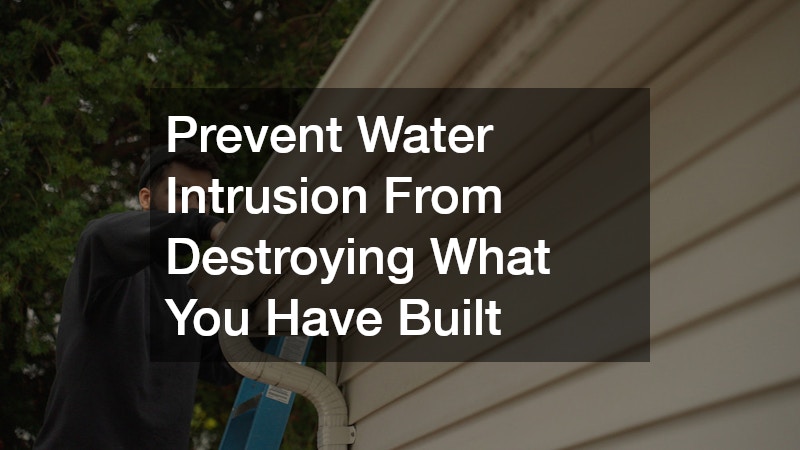
Gutters are one of the most underappreciated systems in a home. When they are functioning properly, they are invisible. When they are clogged, damaged, or pulling away from the fascia, they silently direct water toward the foundation, behind the siding, and into the basement or crawl space. The damage that follows is rarely dramatic in the short term but consistently expensive over time.
Scheduling regular gutter services is a low-cost maintenance investment that protects systems far more expensive than the gutters themselves. A clogged gutter during a heavy rainstorm can send hundreds of gallons of water cascading against the foundation in a single event. Over multiple seasons, this saturates the soil around the foundation, increases hydrostatic pressure against basement walls, and creates the conditions for cracking, bowing, and water infiltration that can cost tens of thousands of dollars to correct.
Recover Faster and Smarter After Water Damage Strikes
Even in a well-maintained home, water damage can happen. A supply line fails behind a washing machine. A roof leak goes unnoticed long enough to saturate the ceiling framing. A toilet overflows while no one is home. When water enters the building envelope, the clock starts immediately. Mold can begin developing in saturated drywall and framing within 24 to 48 hours, and the longer moisture sits in building materials, the more of those materials have to be removed and replaced.
Professional water damage restoration is worth every dollar in this scenario, and it pays for itself in ways that go beyond the immediate repair. Certified restoration professionals use industrial drying equipment and moisture mapping technology to confirm that all affected materials are fully dried before reconstruction begins, which prevents the mold and structural decay that drives up long-term costs. They also produce detailed documentation of the damage and the remediation process, which is essential for maximizing an insurance claim and ensuring the full cost of the event is recovered.
Coordinate Big Upgrades Through a Single Professional

When multiple upgrades are happening simultaneously or in close succession, the coordination between trades becomes its own source of risk. Miscommunication between an electrician and a plumber about rough-in locations leads to rework. A flooring installer shows up before the subfloor moisture remediation is complete. A cabinet delivery arrives before the electrical rough-in is done and blocks access for days. Each of these scenarios costs money and time, and they are remarkably common when homeowners try to manage multiple contractors independently.
Hiring experienced general contractors to oversee a multi-trade upgrade project eliminates this coordination risk. A skilled general contractor sequences the work correctly, ensures each trade has the access and information they need when they need it, and holds subcontractors accountable to the project timeline and quality standards.
Add an Outdoor Living Space That Increases Property Value
Outdoor living space is one of the most consistently high-return categories in residential real estate. Buyers pay a premium for homes with functional, well-maintained outdoor areas, and that premium has grown steadily as more people work from home and spend more time in their own spaces. A deck that is in excellent condition adds usable square footage to the home, increases buyer appeal, and delivers daily quality-of-life benefits to the current owner.
The financial case for addressing deck repairs before they escalate is compelling. A deck with surface boards that are beginning to check or gray can be restored for a modest investment. A deck with a compromised ledger board or rotted post footings may need to be partially or fully rebuilt, at a cost that can be five to ten times higher than what the early repair would have been. Annual inspections of the structural components beneath the surface decking, including the ledger, joists, posts, and footings, catch deterioration at the stage when it is still inexpensive to fix and before it affects the safety and value of the structure.
Secure the Property Boundary With a Long-Lasting Investment
Perimeter fencing consistently delivers returns across multiple categories simultaneously. It increases privacy and security, both of which are top priorities for buyers in most markets. It defines the property boundary clearly, which eliminates ambiguity with neighbors and can prevent disputes that are costly and stressful to resolve. In some cases, it also reduces homeowner’s insurance premiums by limiting liability exposure around pool areas or other hazards.
Working with a reputable fence company to install or replace perimeter fencing is an upgrade that continues paying back long after installation. The key to maximizing the return is choosing materials based on the total cost of ownership rather than the upfront price alone. A wood fence may have a lower initial cost but requires regular staining or sealing and has a shorter lifespan in wet climates.
Add Organized Storage to Reduce Clutter and Increase Appeal
Storage is one of the most common complaints buyers have about homes they tour, and one of the easiest to address before a sale. More immediately, insufficient storage forces homeowners to use garage space, interior closets, and living areas for items that would be better housed elsewhere, which reduces the functionality and perceived size of the home on a daily basis.
Commissioning professional storage shed builders to design and construct a purpose-built outdoor structure adds functional square footage to the property at a fraction of the cost of a home addition. A well-built shed keeps tools, seasonal equipment, lawn care supplies, and recreational gear organized and out of the living spaces, which makes every area of the home work better.
Protect the Home’s Structure From Pest Damage Year-Round
Structural pest damage is one of the most financially devastating things that can happen to a home, and it is also one of the most preventable. Termites alone cause an estimated five billion dollars in property damage in the United States every year, and the vast majority of that damage is not covered by standard homeowner’s insurance policies. Carpenter ants, wood-boring beetles, and rodents compound the problem, targeting framing, insulation, and wiring in areas that are rarely inspected until the damage is already extensive.
Enrolling in a recurring pest control program is one of the lowest-cost, highest-protection investments available to a homeowner. A professional service provides scheduled inspections, targeted treatments, and continuous monitoring that catches activity before it reaches the structural components of the home. The annual cost of a comprehensive pest management plan is typically a small fraction of what even a minor termite remediation costs, making the math entirely straightforward. Pair the recurring program with a dedicated inspection of crawl spaces, attic framing, and wood-to-soil contact points around the foundation, as these are the areas where infestations almost always originate and where early detection makes the biggest financial difference.
The upgrades that pay for themselves are rarely the ones that appear in design magazines or generate excitement at dinner parties. They are the ones that quietly reduce what you spend every month, prevent the expensive emergencies that derail household budgets, and make your home more valuable to the next buyer than it was when you bought it. That is a different kind of satisfaction than a beautiful new kitchen delivers, but it is a more durable one.