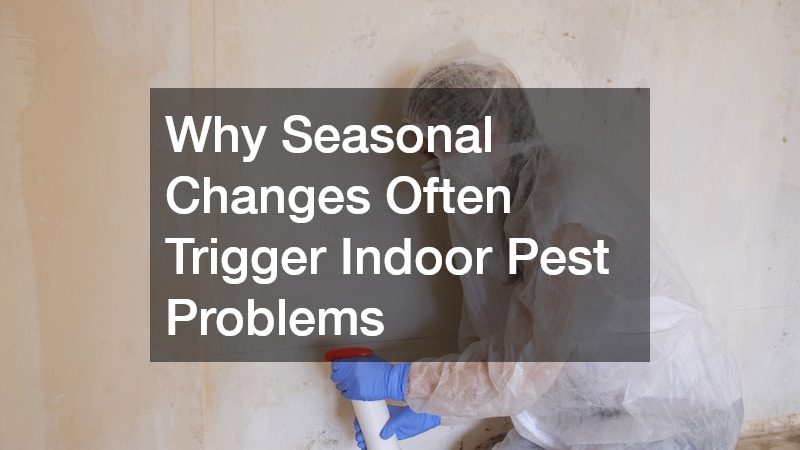
As the seasons shift, many homeowners start noticing changes in their living environment. Cooler temperatures, increased humidity, and shifting food sources outside can all influence where pests choose to settle. Homes often become more attractive as insects and rodents look for warmth, shelter, and consistent access to food.
Working with a pest control company can help homeowners address these seasonal invasions before they become larger infestations. Early identification and prevention often make treatment more effective and less disruptive to daily life.
Weather Changes Push Pests Indoors
Seasonal transitions play a major role in pest behavior. When outdoor conditions become less favorable, many species begin searching for indoor shelter.
Common seasonal invaders include:
- Ants
- Cockroaches
- Rodents
- Spiders
- Stink bugs
- Silverfish
These pests often enter homes through small openings around doors, windows, and utility lines. Once inside, they may establish nesting areas in hidden or less disturbed spaces.
Kitchens and Pantries Attract Unwanted Activity
Food sources are one of the strongest attractants for household pests. Even small crumbs or improperly sealed containers can draw insects and rodents into kitchens and storage areas.
Problem areas often include:
- Unsealed food containers
- Pet food storage areas
- Trash bins without tight lids
- Crumbs under appliances
- Pantry shelves with spills
Maintaining cleanliness can reduce attraction, but even well kept homes may still experience pest activity during peak seasonal movement.
A pest control company may inspect these areas to identify entry points and nesting patterns that are not easily visible.
Moisture Problems Can Increase Pest Presence
Many pests are drawn to moisture rich environments. Leaky pipes, damp basements, and poorly ventilated bathrooms can create ideal conditions for infestations.
Areas commonly affected include:
- Under sinks
- Laundry rooms
- Crawl spaces
- Basement corners
- Bathroom plumbing areas
Moisture not only attracts pests but can also support their reproduction cycles, allowing populations to grow more quickly if left untreated.
Addressing leaks and improving ventilation can help reduce long term pest activity.
Entry Points Around the Home Often Go Unnoticed
Pests do not need large openings to enter a home. Many can squeeze through extremely small gaps that are easy to overlook during routine maintenance.
Common entry points include:
- Cracks in foundation walls
- Gaps under doors
- Damaged window screens
- Utility line openings
- Roof vents and attic spaces
Sealing these areas can reduce the likelihood of pests gaining access to indoor living spaces.
Professional inspections often help identify vulnerabilities that homeowners may miss.
Rodents Can Cause Structural and Electrical Damage
Rodent infestations can lead to more than just inconvenience. Mice and rats are known to chew through wires, insulation, and wooden structures, which can create safety hazards over time.
Potential risks include:
- Electrical system damage
- Contaminated food supplies
- Insulation destruction
- Unpleasant odors
- Structural weakening in hidden areas
Because rodents often remain hidden, infestations may grow significantly before they are detected.
A pest control company may use targeted methods to locate nesting areas and safely reduce rodent populations.
Early Detection Helps Limit Infestation Size
Catching pest activity early often makes treatment more manageable. Small infestations are typically easier to control than those that have spread throughout multiple areas of a home.
Early warning signs may include:
- Droppings in hidden areas
- Scratching noises in walls
- Unusual odors
- Chewed packaging or wiring
- Visible insect trails
Addressing these signs quickly can help prevent larger infestations from developing.
Preventative Care Supports Long Term Protection
Ongoing prevention is one of the most effective ways to reduce pest problems over time. Regular inspections and maintenance can help keep homes less attractive to unwanted insects and rodents.
Preventative steps may include:
- Sealing cracks and openings
- Keeping storage areas organized
- Managing outdoor landscaping
- Reducing standing water
- Scheduling routine inspections
These measures can create a less inviting environment for pests throughout the year.
Maintaining a Pest Free Home Environment
Seasonal pest activity is a common challenge for many homeowners, but consistent prevention and early response can make a significant difference. Understanding how pests enter and why they are attracted to certain areas helps reduce long term issues.
A pest control company can provide support through inspection, treatment, and prevention strategies designed to protect the home environment. With the right approach, homeowners can maintain a cleaner, safer, and more comfortable living space throughout every season.